




Integrating Your Walking Pad Treadmill Into Daily Life
Productivity, Wellness and Habit Formation
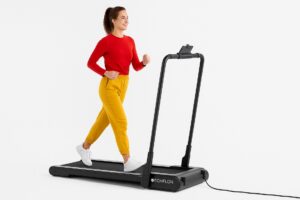
Investing in a treadmill with a desk-mounted walking pad is just the start. Integrate the treadmill into your daily routine in a manner that makes it nearly unnoticeable, allowing you to fully enjoy its benefits.
1. The Psychology of Habit Formation
Let’s start with the basics, shall we?
- BJ Fogg, a behavioral psychologist and author of Tiny Habits, says that the key to making habits that stay is to concentrate on the following:
- When you link a new habit to something you already do, that’s an anchor moment.
- If something is good, it is more likely that you will have it again in the future.
- Ease means to make things easier by reducing friction (don’t make the routine hard or convoluted).
This explains why walking pads are important.
- Instead of a “fitness room” that people may not use, think about putting the treadmill in your work area.
- Put things you like to do, like calls, podcasts, or creative work, in the same group as walking.
- Start with baby steps; five minutes a day is an excellent place to start.
To start, say to yourself, “I’ll walk for three minutes while I check my first email of the day.”
2. Create a Walk-Friendly Workspace
A. Adjust Your Standing Desk Properly
- To get the best ergonomics, make sure that the height of your workstation lets your elbows rest at a 90-degree angle as you type.
- You should make sure that your display is at eye level. If you need to, you may use a riser.
B. Place the treadmill pad centered beneath the desk.
- You shouldn’t walk with one foot off the pad or step unevenly while you walk.
- Use a treadmill mat beneath the treadmill to reduce noise and keep the pad from sliding about.
C. Minimize Obstacles
- Please take away the wires, drawers, and other things that are in your way.
- You may avoid tripping hazards by using cord clamps or a cable management box.
3. What to Do While Walking: Task-Based Integration
Let’s divide it down according to the different types of tasks:
A. Administrative Tasks (email, data entry, scheduling)
- The best speed is between 1.2 and 1.8 mph.
- This is a great way to start the day with some physical exercise that doesn’t take a lot of focus.
B. Creative Work (brainstorming, writing, designing)
- The best speed is between 0.8 and 1.5 mph.
- Walking helps you think outside the box and come up with new ideas while you’re being creative.
C. Meetings or Calls
- The best speed is between 1.5 and 2.0 mph.
- Use wireless earphones so you can use your hands.
- If you move too much for the camera to stay still, turn off the video.
D. Studying/Reading
- Best speed: 0.5 to 1.2 mph
- You should either slow down or stop walking if you are really focused.
Pro Tip: If you need to, use the treadmill for lighter jobs and stand or sit for difficult ones.
4. Designing a Walking Work Schedule
Structure makes it easier to stay consistent. Here are three templates to show you what I mean:
A. Beginner: “One Hour Daily Walk” Plan
Time | Activity |
|---|---|
| 9:00–9:30am | Walk while checking emails |
| 1:00 – 1:30pm | Walk during a virtual meeting. |
| Optional | Add a 15-minute post-lunch stroll. |
Goal: Walk for an hour at a low intensity level spread out during the day.
B. Intermediate: “Focused Block Walking” Plan
Time | Activity |
|---|---|
| 8:30–10:30am | Walk during admin tasks & calls |
| 12:30 – 1:00pm | Stretch and take a short walk |
| 3:00 – 4:00pm | Walk while doing low-focus work |
The objective is to walk for two to three hours straight. Get stronger.
Advanced: “Active Workday” Plan
Time | Activity |
|---|---|
| 9:00–11:00am | Walk during creative tasks |
| 1:00 – 2:00pm | Walk & talk during meetings |
| 4:00–5:00pm | Finish light tasks while walking |
The objective is to walk on the treadmill for three to four hours. Get your NEAT, which stands for non-exercise activity thermogenesis, as high as you can.
5. Cognitive and Health Benefits of Low-Speed Walking While Working
New studies from Stanford University, the Mayo Clinic, and Harvard University suggest that moving about a little while you work is good for you.
Benefit | How It Helps |
|---|---|
| Improved Focus | Walking increases oxygen and glucose delivery to the brain |
| Boosted Creativity | Promotes fluid, divergent thinking (ideal for problem-solving) |
| Reduced Back Pain | Walking engages core and lumbar muscles |
| Improved Metabolism | Avoids long periods of inactivity |
| Enhanced Mood | Releases endorphins and reduces cortisol |
Walking at a speed of 1.5 mph burns two to three times as many calories as sitting stationary.
6. Tactics to Build the Habit (Even on “Off” Days)
A. Start Small
The aim of “walking for five minutes during lunch” is more manageable than the goal of “doing 10,000 steps.”
B. Use Triggers
Walk in conjunction with anything that is automatic:
- Do you have coffee in the morning? Take a stroll after you have your coffee.
- Would this be your first time using Zoom? As you navigate through it,
- Recap of the day: navigate through your day while walking.
C. Reward Yourself
Put your treadmill routine into a game:
- For tracking streaks, you can make use of applications such as Apple Fitness+, Fitbit, or KS Fit.
- Give yourself permission to watch a show while you are walking.
- Earned step counts can serve as “poEarned step counts can serve
7. Barriers & How to Overcome Them
Obstacle | Solution |
|---|---|
| “I forget to walk.” | Set calendar reminders or visual sticky notes |
| “Too worn out after work.” | Walk during work instead of saving it for later |
| “It’s noisy.” | Add mat, check belt tension, or lubricate |
| “Not enough space” | Use a foldable model like WalkingPad A1 Pro |
| “I feel silly walking indoors.” | Reframe as a productivity tool, not exercise |
8. Habit Formation Timeline (What to Expect)
Days | Stage | Notes |
|---|---|---|
| Days 1–3 | Novelty/excitement | Easy motivation, low resistance |
| Days 4–10 | Adjustment period | Expect some fatigue a learning curve |
| Days 11–21 | Routine building | The treadmill starts to feel like a normal tool |
| Days 22–30 | Habit solidifies | The brain now expects movement during certain tasks |
| Day 31+ | Maintenance | Walking becomes effortless and sustainable |
📅 It takes 21–30 days to fully automate a new habit. Stick with it through the “messy middle.”
9. Bonus: Treadmill + Wellness Stacking
Add-on Habit | Stack With Walking… |
|---|---|
| Drinking more water | Keep a water bottle at your desk |
| Stretching | Add 5 minutes pre/post walk |
| Breathing exercises | Do mindful breathing while walking |
| Gratitude journaling | Walk slowly and reflect mentally |
| Eye strain relief | Use 20-20-20 rule during breaks |
Build a Better Day, One Step at a Time
Treadmills hidden under desks are not only useful for Treadmills hidden under desks are not only useful for physical exercise, which not only benefits health, but they also serve as a habit machine by incorporating movement into the activities that you are already performing.
- Free of effort
- Invigorating:
- Long-term viability
People of all ages and backgrounds, including students, professionals, and retirees, can improve their physical and mental health by walking while working. You can achieve these improvements without investing extra time or making frequent trips to the gym.
- How to Integrate a Walking Pad Treadmill
- Health Benefits of Using Walking Pad
- WalkingPad A1 Pro Foldable Under Desk Treadmill
- WalkingPad A1 Pro vs Other Popular Models
- WalkingPad A1 Pro and Similar Walking Pad
- Maintenance and Troubleshooting Guide for Walking Pad
- Walking Pad vs Other Compact Fitness Equipment
- Choosing the Right Walking Pad
- Expert Recommendations and Buying Guide for Walking Pad
- Maintenance, Troubleshooting, and Long-Term Care